
Technical Articles
Bead Mill Selection for Silicon-Carbon Anode Materials
Evaluate particle-size targets, grinding media, separation, wear, contamination, cooling, and process controls for wet grinding of silicon-containing anode formulations.
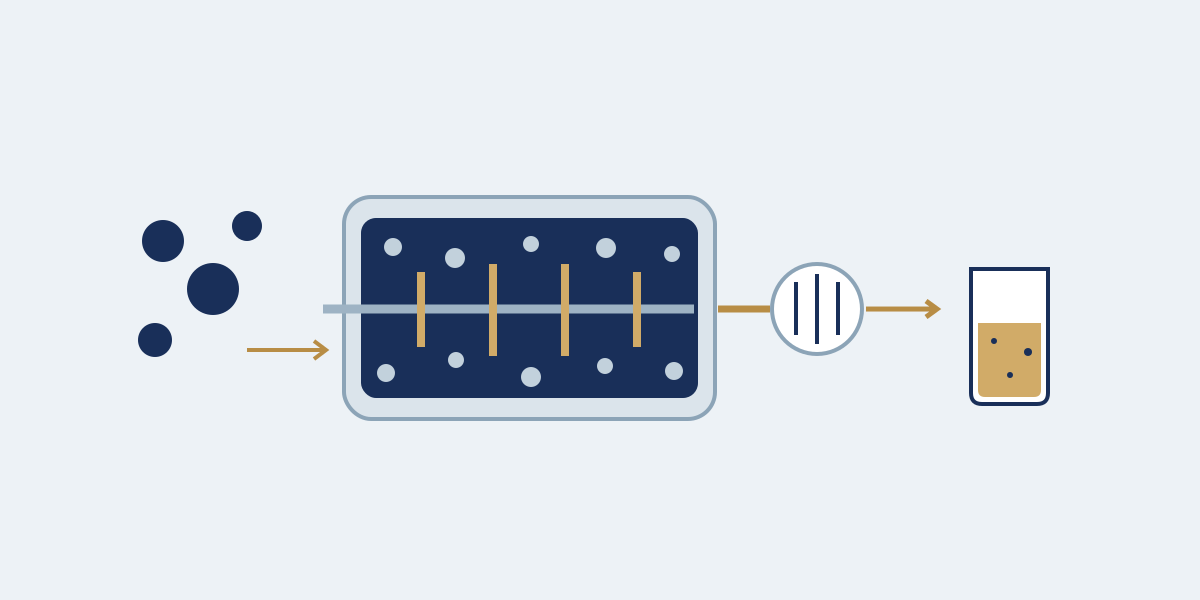
Yushun's domestic article discusses silicon-carbon anode materials and the equipment used in relevant grinding processes. For a formulation that requires wet particle-size reduction or deagglomeration, bead milling can be evaluated as part of the material-processing route.
Not every silicon-carbon production route has the same equipment requirements. Define the material, process objective, and quality measurements before choosing a mill.
Start With the Grinding Objective
Describe the feed and target particle-size distribution, slurry composition, solids content, viscosity, and batch or flow requirement. Establish the sampling method and how the result will be compared between trials.
Smaller particles or better dispersion alone do not prove the electrochemical performance of the final anode. The material-development team must define the relevant acceptance criteria for the complete product.
Match Grinding Action and Media Retention
The rotor transfers energy through the grinding media to the slurry. Media size, material, loading, and the separation arrangement must work with the feed and required process result.
The smallest advertised media size is not automatically the appropriate choice. Confirm which media the selected separator can retain and under what material and operating conditions.
Check stable flow and separation during trials. A separation concept should not be described as eliminating all blockage or media carryover without evidence under the agreed conditions.
Compare the Existing Mill Configurations Separately
Yushun's current catalog has separate pages for the pin-type nano bead mill and dual-power centrifugal bead mill.
The domestic article uses overlapping product names. For selection, review each catalog configuration and its grinding, separation, material, and cooling options rather than treating those names as one confirmed machine. The final rotor and separator arrangement should be defined in the project specification.
Review Wear, Contact Materials, and Purity
The source discusses wear-resistant grinding components and contact-material options. Select these for the slurry and the permitted contamination, and evaluate the complete wetted path.
Component choice does not establish a fixed life-extension factor. Record the test conditions, wear observations, maintenance needs, and the basis of any proposed service-life estimate.
Cooling, Controls, and Repeatability
Cooling should support the formulation's temperature limit through repeated processing or recirculation. Record temperature with the process conditions so that different trials can be compared.
Where PLC and touchscreen controls are specified, agree on the operating information, instrument scope, alarms, and records needed for the process. Automated controls support an established operating window; they do not guarantee an untested grinding result.
Build the Selection Discussion Around Trial Data
Provide material composition, feed and target sizes, measurement methods, purity limits, temperature requirements, and output needs. Compare quality, processing conditions, available energy data, separation behavior, and maintenance considerations.
Start with a laboratory bead mill evaluation and review laboratory selection considerations. Send your silicon-containing material requirements for an engineering discussion.
Adapted from Yushun's domestic silicon-carbon grinding article, displaying July 10, 2024. Prepared October 14, 2026. Confirm the required configuration and material results through engineering evaluation and agreed trials.
Engineering consultation
Need Help With Your Process?
Tell our engineers about your material, target particle size, viscosity, capacity, and production goals.