
Process solution
Lithium Battery Slurry Processing Solution
Coordinate powder charging, high-viscosity mixing, vacuum deaeration, temperature control, transfer, homogenization, filtration, and line controls around the slurry formulation.
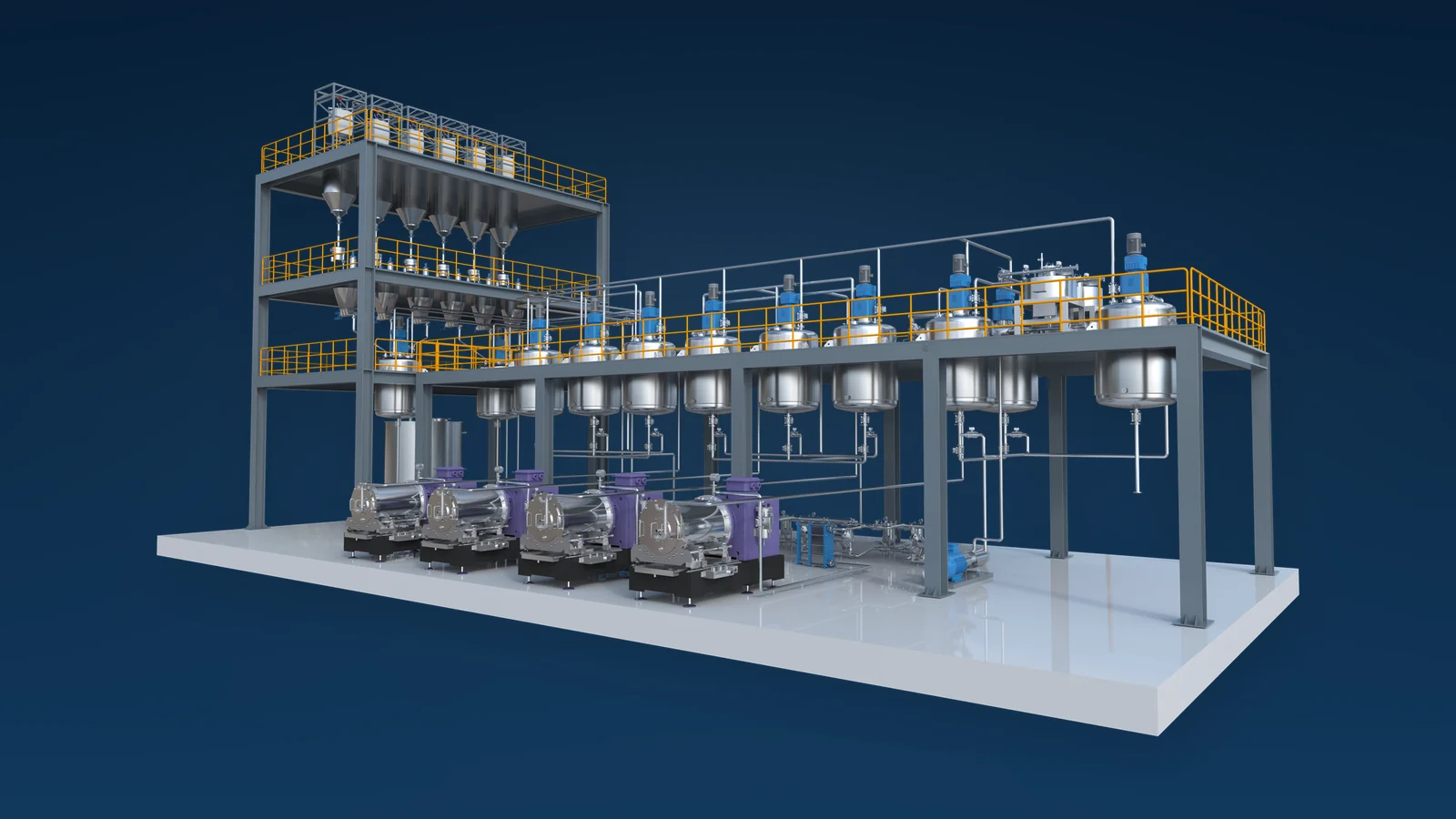
Prepared from Yushun’s 2026 product knowledge base and existing product data. Material compatibility, cleanliness, safeguards, automation scope, and acceptance criteria require engineering review, trials when appropriate, and an approved project agreement.
Solution Overview
Process flow
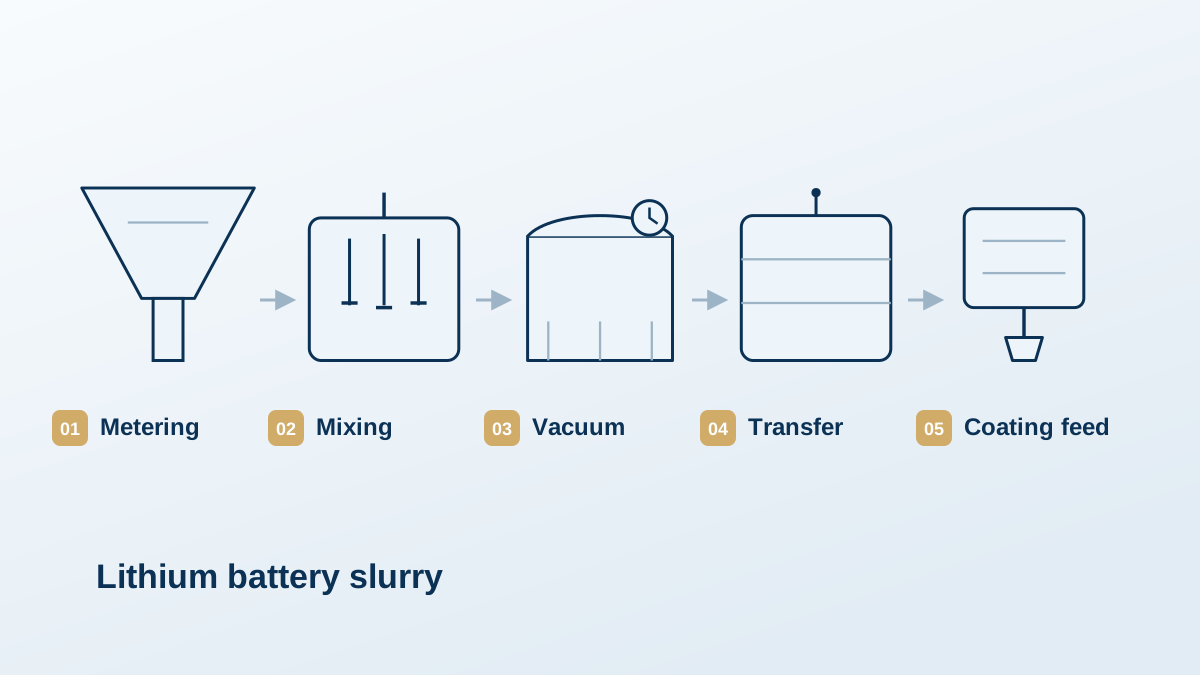
The diagram shows the order of the process steps only. Equipment configuration, capacity and parameters are confirmed per material and project.
What is a lithium battery slurry processing solution?
A lithium battery slurry processing solution coordinates the operations between raw-material charging and delivery of a controlled slurry to the next production stage. The scope may include charging, high-viscosity mixing, dispersion, vacuum deaeration, temperature control, transfer, intermediate storage, secondary agitation or homogenization, filtration, sampling, and automation.
The system must be selected around the actual formulation. Solids content, viscosity development, powder condition, permitted contamination, temperature sensitivity, moisture control, discharge behavior, and traceability can all affect the equipment sequence and control strategy.
How the mixing stage is selected
A double planetary mixer can be evaluated for high-solids, high-viscosity slurry mixing, dispersion, homogenization, and vacuum deaeration. A vertical planetary kneader can be compared where the material has greater elasticity, torque demand, or discharge difficulty. These are selection directions, not universal viscosity or cycle-time guarantees.
For early process work, laboratory-scale trials can support preliminary mixing and dispersion comparisons when their scale and material range are appropriate. Trial results should be recorded with formulation, charge mass, speed, time, temperature, vacuum, and sampling conditions.
How transfer, homogenization, and filtration fit the line
Mixing cannot be designed independently from downstream handling. Discharge structure, pumps, piping, intermediate vessels, secondary agitation or homogenization, filtration, sampling points, hold-up, and cleaning access influence both product quality and line utilization. Yushun’s knowledge base also identifies automatic charging and magnetic filtration equipment for battery-slurry projects; their exact configuration remains project-specific.
How to prepare an engineering discussion
Start with the formulation, batch target, process sequence, utilities, installation constraints, required records, and acceptance criteria. Then define equipment interfaces, safeguards, recipe control, commissioning, training, and the responsibility boundary between the customer and supplier.
Review the lithium battery slurry application, or submit your slurry process requirements for a preliminary engineering discussion.
Production line arrangement
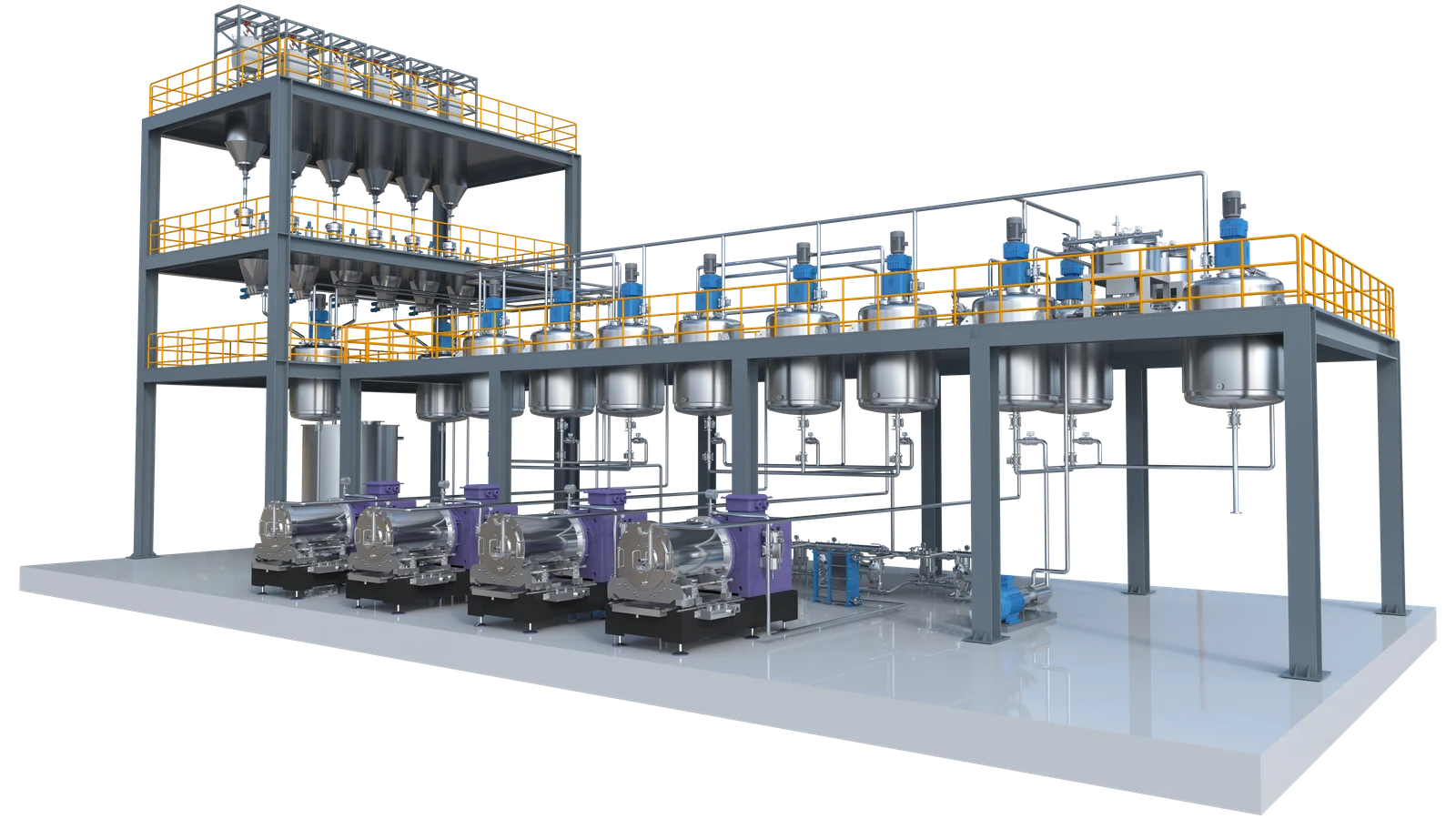
The rendering illustrates one possible arrangement of the line; the layout, tank volumes, mill configuration and controls are confirmed per project and are not a delivery scope.
Engineering sequence
How the process is planned
01
Define the slurry and quality criteria
Review chemistry, solids content, viscosity profile, powder condition, batch size, temperature limit, cleanliness, moisture control, deaeration, and downstream quality requirements.
02
Plan charging and high-viscosity mixing
Coordinate the charging sequence, dust-control interface, vessel working volume, mixer torque, blade arrangement, temperature control, vacuum operation, and recipe stages.
03
Control transfer and finishing
Evaluate discharge behavior, transfer pumps, intermediate storage, secondary agitation or homogenization, filtration, sampling, and material retained in the process path.
04
Integrate controls and project delivery
Define instrumentation, recipe permissions, interlocks, batch records, equipment interfaces, installation responsibilities, commissioning, training, and acceptance boundaries.
Selection basis
Information needed for evaluation
- Electrode material and formulation system
- Solids content, density, and viscosity through each process stage
- Powder condition, charging sequence, and dust-control requirements
- Batch size, working volume, and production schedule
- Maximum product temperature and available heating or cooling utilities
- Vacuum, deaeration, moisture-control, and inerting requirements
- Permitted contamination and required contact materials
- Discharge, transfer, intermediate storage, homogenization, and filtration requirements
- Cleaning method, changeover frequency, traceability, and automation scope
Equipment options
Recommended equipment
Application context
Related applications
Solution FAQ
Frequently Asked Questions
What equipment is used for lithium battery slurry processing?
The equipment sequence depends on the formulation and plant scope. It can include powder charging, a double planetary mixer or kneader, vacuum and temperature-control systems, transfer and intermediate vessels, homogenization, filtration, instrumentation, and line controls.
How do I choose between a double planetary mixer and a vertical planetary kneader?
A double planetary mixer is commonly evaluated for flowable high-solids, high-viscosity slurries that require mixing, dispersion, homogenization, and vacuum deaeration. A kneader can be evaluated when the material has still higher viscosity, elasticity, torque demand, or difficult discharge behavior. Material trials and process data should determine the final choice.
Which process data should be provided before equipment selection?
Provide the formulation system, solids content, density, viscosity profile, powder condition, batch size, temperature limit, vacuum and moisture requirements, contamination limits, charging method, discharge behavior, downstream transfer and filtration, cleaning method, and automation expectations.
Can Yushun integrate automatic charging and filtration?
Yushun’s product knowledge base includes automatic charging, intermediate storage, slurry homogenization, and magnetic filtration equipment within the battery-slurry system. The exact equipment, safeguards, control interfaces, and division of responsibility must be confirmed for each project.
Does laboratory testing guarantee production performance?
No. Trials can help compare mixing, dispersion, temperature, deaeration, and material-handling behavior, but production performance also depends on scale, equipment geometry, utilities, controls, operating procedure, and agreed acceptance conditions.
Engineering consultation
Discuss Your Process Solution
Tell our engineers about your material, target particle size, viscosity, capacity, and production goals.