
Technical Articles
How to Select Battery Slurry Mixing Equipment
Evaluate working volume, vacuum sealing, material compatibility, blade design, and safety when selecting a mixer for lithium-ion battery electrode slurries.
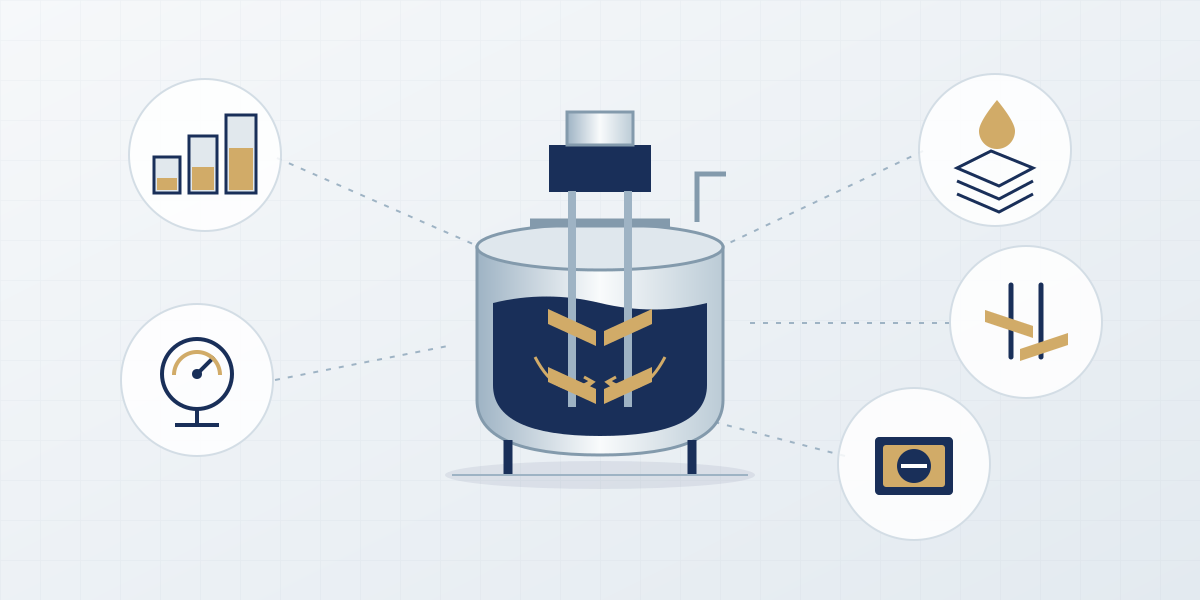
Electrode slurry preparation is an important step in lithium-ion battery manufacturing. The quality of mixing and dispersion affects the material delivered to coating and the consistency of later production stages.
A slurry combines active material, binder, solvent or water, and other ingredients specified by the formulation. Many electrode slurries are viscous, non-Newtonian fluids, meaning that their apparent viscosity depends on the conditions under which they are mixed or measured. A useful equipment specification therefore needs more than a batch volume and motor rating.
Yushun's domestic selection guide identifies five areas to review: capacity, vacuum sealing, construction materials, blade design and speed, and safety. The following explanation puts those considerations into a practical purchasing discussion for international projects.
1. Match Working Volume to the Production Requirement
Battery manufacturing needs repeatable slurry batches that support the electrode production schedule. Select a working volume that fits the target batch, formulation, and downstream demand.
Working volume and vessel design volume are different values. Confirm the usable charge for the actual material rather than treating the full vessel capacity as the production batch size. Discuss the smallest and largest batches to be processed in the same equipment.
Capacity should be considered alongside mixing action. A larger vessel does not automatically reproduce a laboratory result, and a high disperser tip speed does not by itself establish acceptable dispersion. The drive, blades, ingredient addition sequence, and temperature control need to work together.
For available reference configurations, see the double planetary mixer. Final selection should be supported by representative slurry trials and agreed quality measurements.
2. Define Vacuum, Sealing, and Deaeration Requirements
A sealed vessel and an appropriate vacuum configuration can support slurry deaeration. The system also needs to be assessed for the ingredients and operating environment, including powder charging and solvent vapor handling where relevant.
When comparing vacuum specifications, establish:
- Whether the pressure is expressed as absolute pressure or gauge pressure, and which units are used.
- Whether the stated result was measured in an empty vessel or with representative material.
- The hold-test conditions, permitted pressure change, and seal configuration.
- The required deaeration result and how it will be checked.
- How charging, vapor handling, vacuum, and the site's ventilation arrangements will be coordinated.
A vacuum value on its own does not verify every sealing, cleanliness, or environmental-control requirement. Confirm these as part of the equipment and site specification.
3. Check Material Compatibility, Wear, and Cleanliness
Product-contact materials must be appropriate for the formulation. Review the active powders, solvent or aqueous binder system, additives, cleaning agents, and operating temperature.
The domestic article discusses 316L stainless-steel blades and branded bearings in particular configurations. For a new project, confirm the actual materials and component specification in the quotation and technical agreement. Do not assume one construction applies to every mixer.
Ask the engineering team to review:
- Compatibility of the vessel, blades, seals, and other wetted parts with the formulation and cleaning method.
- Wear and contamination limits, especially where powder characteristics make them important.
- Surface condition, cleaning access, and the risk of retaining material between batches.
- Separation of lubricated drive components from the product-contact area.
- Maintenance requirements and the basis for any component service-life statement.
Evaluate compatibility for the complete material system. A general description such as “corrosion-resistant” is not enough to establish suitability for a specific slurry.
4. Select Blade Geometry and Speed for the Mixing Sequence
Blade shape, relative motion, clearances, and drive capacity influence how material moves through the vessel. The required action may change as powders are charged, wetted, dispersed, and mixed into a more viscous mass.
A double planetary mixer can be evaluated for bulk mixing, with high-speed dispersion where the configuration and formulation call for it. The domestic article describes twisted blades and dry or wet mixing routes; their suitability should be checked for the selected equipment and recipe.
Confirm what each quoted speed describes: planetary revolution, blade rotation, or disperser tip speed. Rotational speed and tip speed are different quantities; comparing numbers without the relevant geometry can be misleading.
During trials, record the addition sequence, speeds, mixing time, temperature, and available drive-load information. Assess dispersion and uniformity using the same acceptance methods planned for production.
5. Specify Safeguards for the Equipment and Site
The safety discussion should cover the actual material hazards, operating sequence, installation, and maintenance activities. Define emergency-stop functions, access and motion safeguards, lifting or vessel-handling arrangements, and operating procedures with the engineering and site teams.
Where the process requires explosion-protection provisions, confirm the scope, applicable project requirements, and supporting documentation for the proposed configuration. A general equipment description is not evidence of a particular certification.
Safety-related functions should be included in the technical specification and checked during the agreed acceptance process. Operators also need training for charging, mixing, discharge, cleaning, and maintenance.
What to Send With a Battery Slurry Mixer Inquiry
A useful inquiry gives the engineering team enough information to evaluate the five areas above:
- Cathode or anode formulation type, ingredient characteristics, and solvent or water-based system.
- Solids content, density, viscosity profile, and the measurement conditions.
- Required working batch size, production schedule, and laboratory or pilot results.
- Addition sequence, target dispersion or uniformity, and acceptance methods.
- Temperature limits, available utilities, vacuum, and deaeration requirements.
- Contact-material, cleanliness, wear, and contamination requirements.
- Charging, discharge, transfer, cleaning, controls, and site safeguard requirements.
This helps define a mixer around the slurry and production process, rather than selecting it solely from a nominal capacity or speed.
Continue the Equipment Selection Discussion
Explore the lithium battery slurry processing solution and battery slurry application, or review the double planetary mixer before sending your slurry requirements.
Adapted from Yushun's Chinese battery slurry mixer selection guide, dated July 10, 2024 on the domestic website. English edition prepared October 14, 2026. Technical terminology and final configurations require engineering review; performance and acceptance conditions are agreed for the specific project.
Engineering consultation
Need Help With Your Process?
Tell our engineers about your material, target particle size, viscosity, capacity, and production goals.