
Technical Articles
Coordinating Planetary Mixing and Press Discharge
Consider mixing, vacuum, jacket temperature control, interchangeable vessels, and discharge together when evaluating equipment for viscous composite materials.
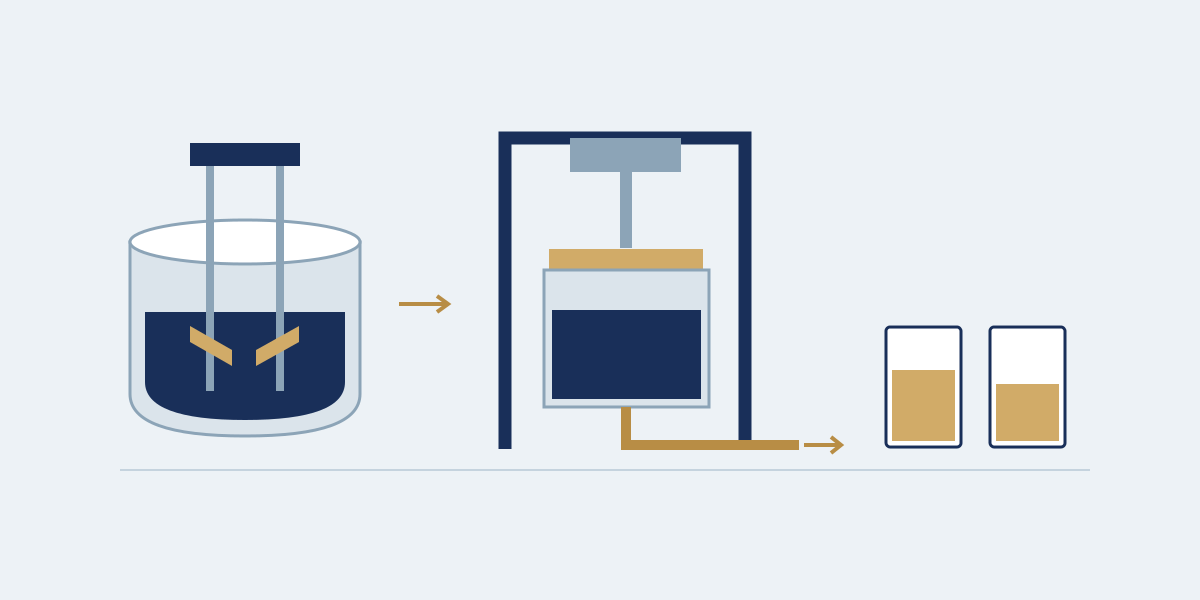
For a viscous composite formulation, the ability to mix the ingredients is only part of the equipment decision. The material must also leave the vessel and reach the next stage in a usable condition.
Yushun's domestic article discusses a combined planetary mixing and press-discharge arrangement. Its general lesson is to evaluate mixing and discharge together instead of postponing the discharge question until after the mixer is selected.
Begin With the Complete Material Path
Define how the material is charged, mixed, deaerated where required, removed from the vessel, and received downstream. Include acceptable residue, cleaning, and changeover requirements.
A material that can be mixed successfully may still be difficult to discharge. Use a representative trial to compare the proposed handling route with the actual formulation.
Mixing Functions Described in the Source
The domestic article describes planetary rotation and revolution, variable-speed operation, scraping, a sealed vessel, jacket heating or cooling, interchangeable vessels, and a lifting arrangement.
These features describe a configuration to be discussed, not a promise that all are standard on every mixer. Confirm which features are included and how they support the recipe and production sequence.
Vacuum and Thermal Control
Where vacuum mixing is needed, define the required material result, sealing arrangement, pressure basis, and acceptance conditions. For temperature control, agree on the formulation limits and available utilities.
The effect of these functions should be checked during mixing and through discharge. A nominal vacuum or jacket option does not establish the complete batch result.
Press Discharge as a Configuration Question
An assisted discharge stage may be considered when the formulation does not empty readily through the planned route. Its suitability depends on flow behavior, receiving equipment, residue, and the approved equipment design.
Discuss the discharge arrangement and acceptance criteria with engineering. The source does not establish a universal pressure, force, time, or waste-reduction percentage, so those values must be agreed for the project.
Vessel Handling and Cleaning
Interchangeable vessels and lifting can support a particular operating sequence, but their value depends on charging access, vessel movement, cleaning, and the site's layout.
Include vessel compatibility and the equipment interfaces in the specification. Operating and maintenance arrangements must be defined for the actual machine rather than inferred from this conceptual article.
Trial and Inquiry Inputs
Provide the material's viscosity and elastic behavior, solids content, batch size, temperature limits, contact-material requirements, and downstream handling needs. Agree how uniformity, discharge, residue, and cleaning will be assessed.
Read the composite mixing discussion and high-viscosity mixing solution. The existing double planetary mixer page describes the mixing equipment; a combined press-discharge package needs its own project scope. Discuss mixing and discharge requirements with Yushun.
Adapted from Yushun's domestic mixing and press-discharge article, displaying July 10, 2024. Prepared October 14, 2026. Final equipment scope and acceptance conditions are agreed for the specific project.
Engineering consultation
Need Help With Your Process?
Tell our engineers about your material, target particle size, viscosity, capacity, and production goals.