
Process solution
Paint and Ink Production Solution
Plan pigment wetting, pre-dispersion, optional bead milling, let-down, filtration, and changeover around the coating or ink formulation.
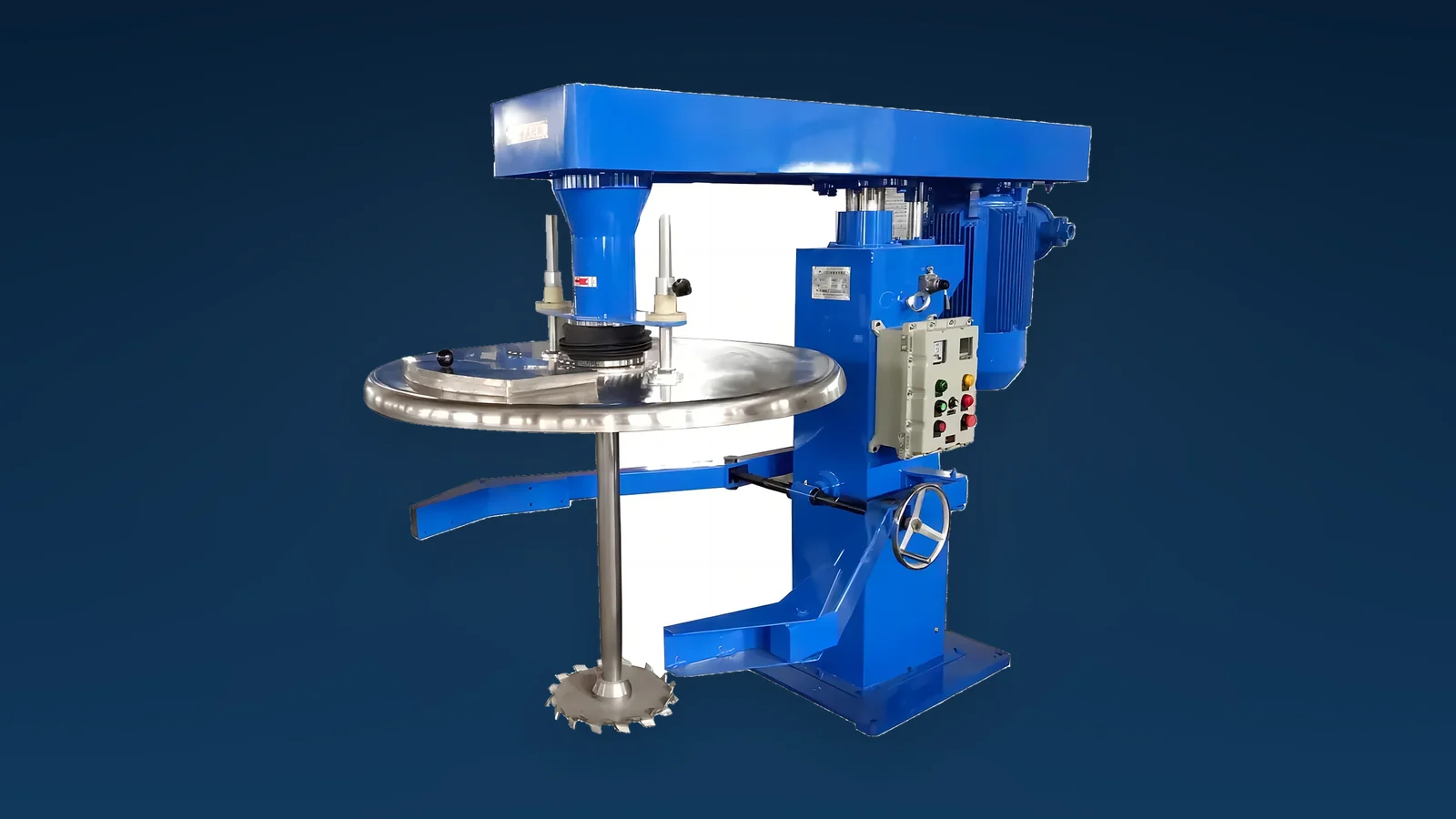
Based on Yushun’s 2026 product and solutions knowledge base and the existing coatings application. This is a preliminary process guide; equipment configuration, solvent safeguards, and performance criteria require material trials and a project-specific technical agreement.
Solution Overview
Process flow
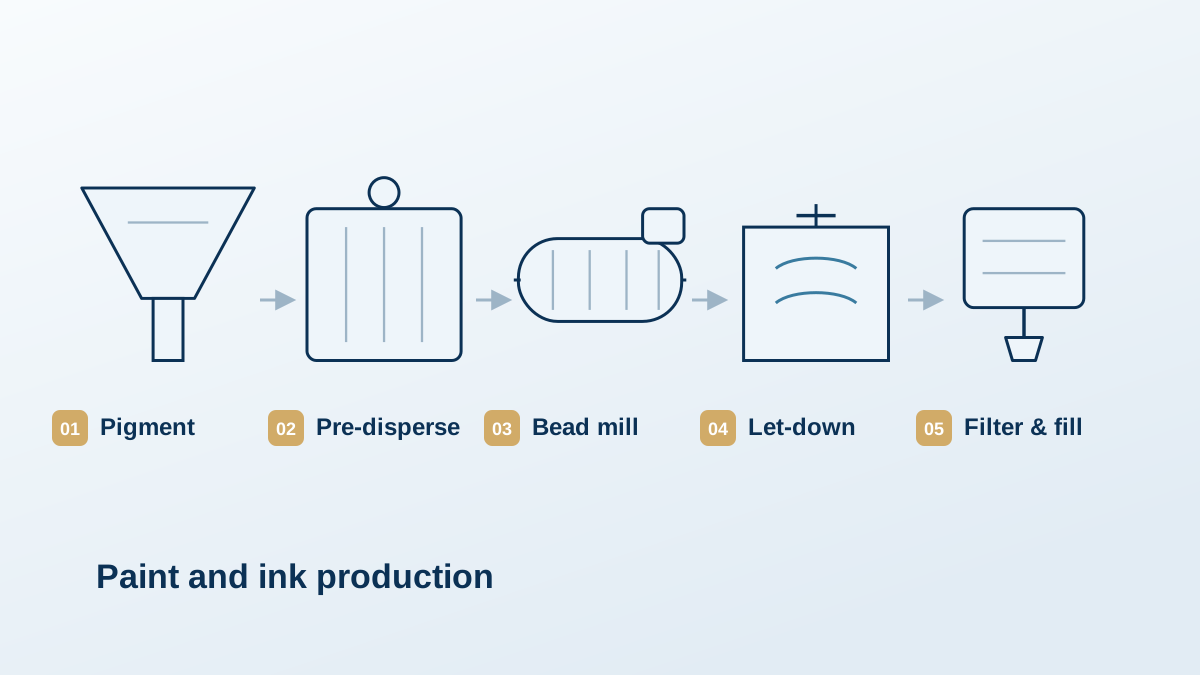
The diagram shows the order of the process steps only. Equipment configuration, capacity and parameters are confirmed per material and project.
What is a paint and ink production solution?
A paint or ink line is a sequence of material-handling and quality-control decisions, not simply a collection of machines. Depending on the formulation, the path may include liquid charging, pigment and filler wetting, pre-dispersion, optional bead milling, let-down or final mixing, filtration, and filling. The process should be specified against the actual material and target quality.
How do dispersion and milling work together?
A high-speed disperser prepares a mill base by wetting powders and breaking up soft agglomerates. If the measured result still falls short of the target, a bead mill can provide further deagglomeration and particle-size control. A laboratory bead mill can support material-specific trials before production equipment is selected. Lab results alone do not guarantee full-scale throughput.
How should the milling stage be chosen?
The knowledge base identifies a disc high-flow bead mill as an option for high-flow continuous production and a pin-type nano bead mill for evaluation when finer grinding or stronger shear is required. Neither designation is a performance guarantee. Resin chemistry, pigments, viscosity, temperature rise, permitted contamination, media, and target capacity all influence the final selection.
What changes for solvent-based or multi-color production?
Solvent classification and site-specific safety requirements affect equipment configuration and project review. For multi-color production, line drainage, cleaning access, retained material, and color sequence also matter. The configuration, safeguards, and scope of automation or installation must be agreed for each project; this page does not assert a standard certified line.
For material-specific issues, see the paint and coatings application or the broader wet grinding and dispersion solution. Share your formulation and production requirements to begin an equipment discussion.
Engineering sequence
How the process is planned
01
Define the formulation and production target
Review resin and liquid phase, pigments and fillers, solids content, viscosity, feed and target fineness, batch size, color requirements, and permitted temperature.
02
Wet and pre-disperse pigments
Select an addition sequence, vessel, and high-speed disperser configuration to incorporate powders and prepare a consistent mill base.
03
Mill only when the target requires it
Test whether dispersion alone meets quality requirements. If further deagglomeration or particle-size control is needed, compare bead mill structures, media, cooling, and throughput using the actual material.
04
Complete let-down and finishing
Coordinate final mixing or let-down, transfer, filtration, cleaning access, and downstream filling with the approved process and safety requirements.
Selection basis
Information needed for evaluation
- Coating or ink type, resin system, pigments, fillers, and liquid phase
- Solids content, viscosity profile, feed fineness, and target quality criteria
- Batch volume or required hourly throughput and changeover frequency
- Maximum material temperature and available cooling utilities
- Solvent classification, site safety requirements, and permitted contact materials
- Cleaning method, contamination tolerance, filtration, and filling interfaces
Equipment options
Recommended equipment
Application context
Related applications
Solution FAQ
Frequently Asked Questions
Does every paint or ink formulation need a bead mill?
No. Some formulations meet their quality target after controlled high-speed dispersion. Bead milling should be evaluated when measured fineness, color development, stability, or deagglomeration requirements cannot be met by dispersion alone.
What does a high-speed disperser do in a paint or ink line?
It incorporates pigments and fillers into the liquid phase, supports powder wetting, and forms a pre-dispersed mill base. Its configuration and operating window depend on the formulation and vessel.
When should a disc high-flow or pin-type bead mill be considered?
A disc high-flow mill can be evaluated when continuous flow and production capacity are priorities. A pin-type mill can be compared when finer grinding, a narrower particle-size distribution, or stronger shear is needed. Material trials and the complete operating limits determine the choice.
What information is needed for preliminary line selection?
Provide the formulation family, solids and viscosity, feed and target fineness, batch or hourly capacity, allowable temperature, solvent classification, contamination limits, cleaning frequency, and upstream and downstream interfaces.
Can one line handle multiple colors or formulations?
It may be possible, but cleaning access, retained material, color sequence, solvent use, and cross-contamination limits must be reviewed. No universal changeover time or compatibility is implied.
Engineering consultation
Discuss Your Process Solution
Tell our engineers about your material, target particle size, viscosity, capacity, and production goals.